


Which car wash is better for your car isn’t really a matter of opinion. It comes down to what actually happens to the paint surface during the wash itself. A professional hand car wash is generally considered the best option for your vehicle, and understanding exactly why makes the choice between hand and automatic washing a lot more straightforward than it might first seem. Here’s how the best hand car wash and an automatic wash actually compare.
The Direct Comparison
| Factor | Automatic Car Wash | Hand Car Wash |
|---|---|---|
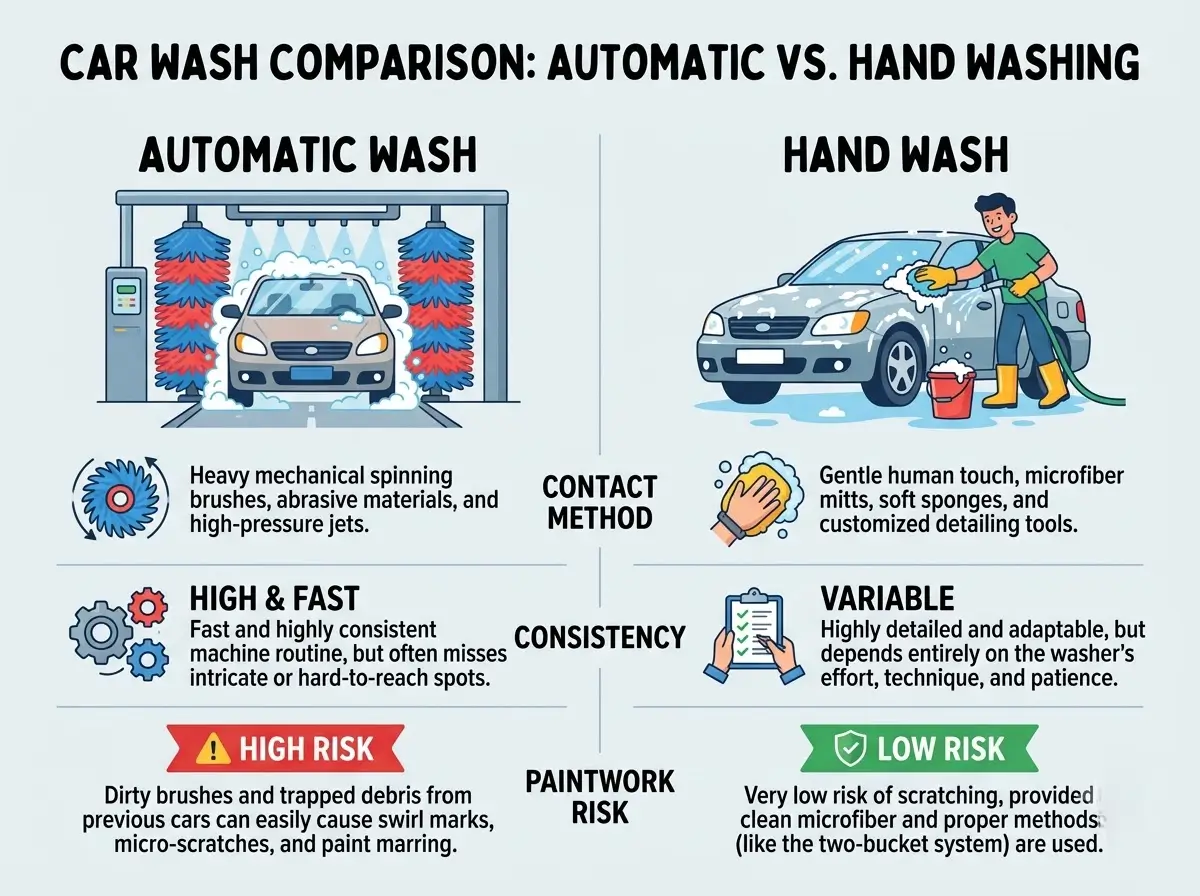
| Contact method | Mechanical brushes or cloth strips | Soft microfibre mitt, worked by hand |
| Consistency of pressure | Fixed, mechanical | Adjusted by the person washing, based on the surface |
| Risk from previous vehicles’ dirt | Brushes can carry residue between cars if not well maintained | Each wash uses fresh materials and clean water via the two-bucket method |
| Attention to detail | Limited to what the machine reaches | Can address specific areas, mirrors, trim, and awkward angles |
| Overall risk to finish | Higher, particularly with poorly maintained equipment | Lower, considered the least damaging method when done properly |
Why Hand Washing Is Considered the Least Damaging Method
The least damaging car wash is a professional hand wash using soft microfibre materials, quality cleaning products, and proper washing methods. Each part of that combination matters: the materials are gentle rather than abrasive, the products are formulated specifically for paintwork rather than generic cleaning agents, and the methods (a full pre-rinse, the two-bucket technique) are specifically designed to avoid dragging dirt across the surface during washing.
What Actually Goes Wrong With Automatic Washing
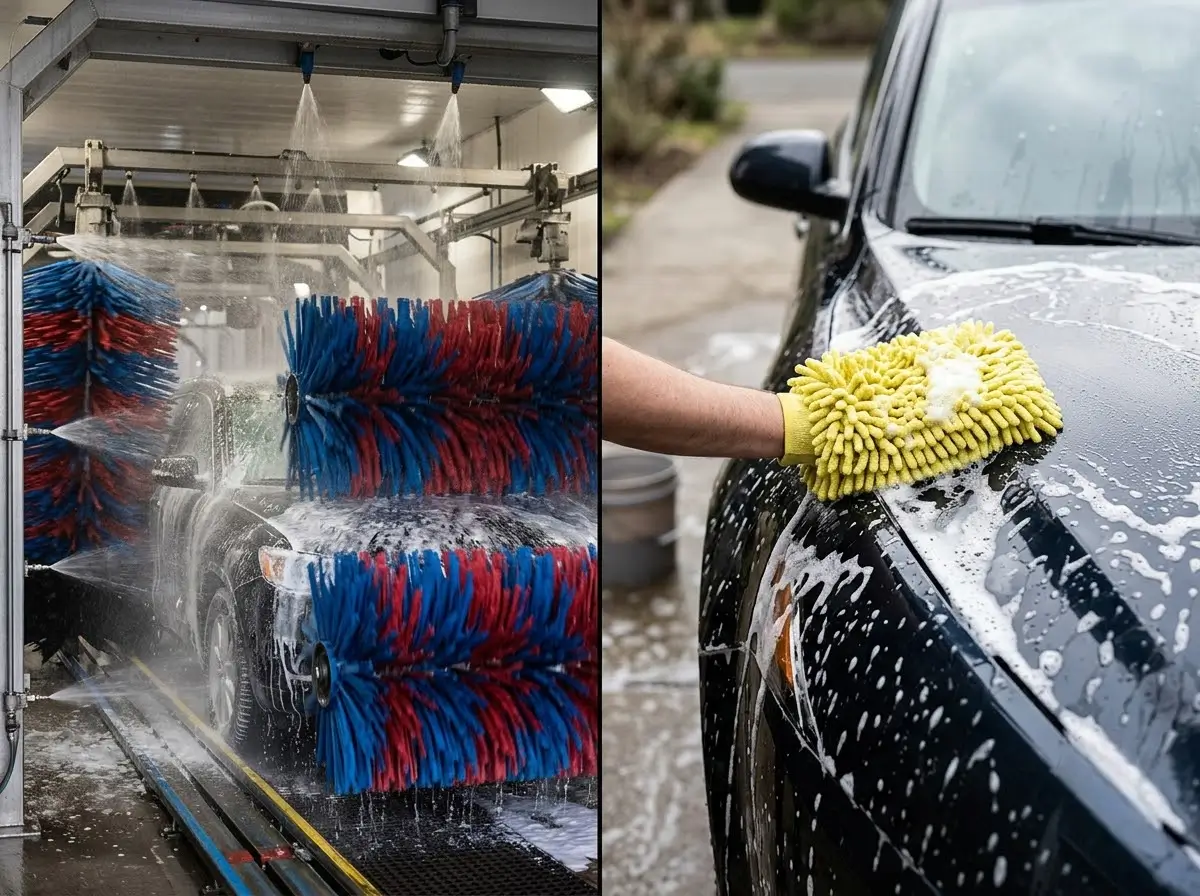
Automatic car washes rely on mechanical brushes or strips making repeated contact with every vehicle that passes through. If those brushes aren’t properly and regularly maintained, they can carry grit and residue from one car to the next, effectively dragging abrasive material across your paintwork without you ever seeing it happen. Even well-maintained automatic systems apply fixed mechanical pressure that can’t adjust to softer trim, delicate badges, or areas that need gentler handling, which is something a person washing by hand naturally does without thinking about it.
The Technique Behind Why Hand Washing Works Better
It’s not simply that a person is doing the washing instead of a machine. The specific technique matters just as much as the method itself. A full pre-rinse loosens dirt before any contact happens, reducing what gets rubbed against the paint. The two-bucket method keeps the water touching your car clean throughout the wash, rather than reintroducing picked-up dirt. Soft microfibre materials make contact gently rather than abrasively. Together, these details are what actually produce the paint-protection advantage, not just the general idea of “hand washing is better.”
Where Automatic Washing Still Has a Reasonable Place
This isn’t a case for never using an automatic wash. For a quick rinse to remove surface dust between more thorough hand washes, an automatic option can be a reasonable, convenient choice. The real risk comes from relying on it as the primary or only method your car gets washed, where the cumulative mechanical contact over many visits adds up to genuine, visible wear on the finish over time.
What This Means for How You Should Actually Wash Your Car
If protecting your car’s finish is a genuine priority, the practical takeaway is straightforward: make hand washing your primary, regular method, and treat automatic washing as an occasional convenience rather than your default choice. The cost difference reflects a real difference in process and risk, not just a markup, and for anyone who cares about how their car looks over the years rather than just today, that difference is worth paying for.
FAQ: Hand Wash vs. Automatic Wash for Paint Protection
Which is actually better for my car’s paintwork, hand washing or automatic?
A professional hand wash is generally considered the best option. It’s the least damaging method when done with soft microfibre materials, quality products, and proper technique.
Why are automatic car washes considered riskier for paintwork?
Mechanical brushes, particularly if not well maintained, can carry grit between vehicles and apply fixed pressure that doesn’t adjust to delicate areas, increasing the risk of fine scratches over time.
Is it ever fine to use an automatic wash?
Yes, for occasional convenience or a quick rinse between proper hand washes. The risk comes mainly from relying on it as your only or primary washing method.
Does the higher cost of a hand wash reflect a genuinely different process?
Yes. It reflects trained labour, proper technique like a full pre-rinse and two-bucket method, and quality materials, not just a price markup for the same outcome.
Does Bright Valeting Group use hand washing exclusively?
Bright Valeting Group specialises in professional hand car wash and valeting services, using the technique and materials known to best protect your vehicle’s finish.
The Short Version
When it comes to protecting your car’s paintwork, a professional hand car wash is the better option. The combination of soft materials, proper pre-rinsing, the two-bucket method, and quality products genuinely reduces the risk of swirl marks and scratches compared with automatic washing. It’s exactly why the best hand car wash is worth prioritising as your regular choice.
Book the Best Hand Car Wash to Protect Your Paint
Protect your car’s finish with Bright Valeting Group or call 07878 930437.
Visit Us Today →