


Most people judge a car wash on what they see when they drive away. Shiny paint, clean glass, done. But the best hand car wash is decided by something you probably never noticed: how many buckets the valeter used, and what went into them.
At our bay in the Morrisons car park on Braintree Road, Witham, we wash every car with the two-bucket method. It sounds like a small detail. On a dark car under supermarket lights, it is the difference between a gloss finish and a bonnet covered in fine circular scratches.
Here’s what goes on, step by step, so you know what you’re paying for.
Why one bucket scratches paint
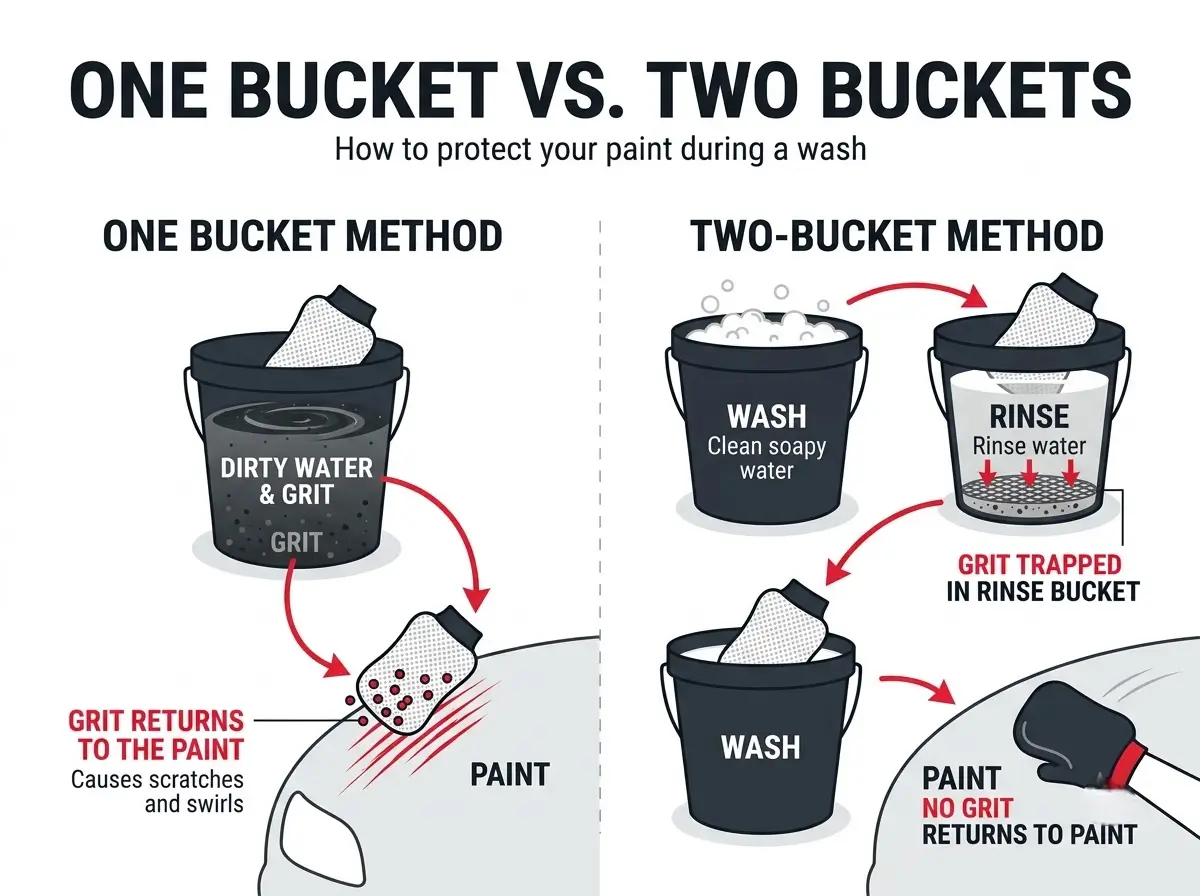
When a valeter wipes a panel, the mitt picks up grit. In a one-bucket wash, that mitt goes straight back into the soapy water, and the grit goes with it. A few panels later, the “clean” water is full of sand and road dirt, and every pass drags it across your paint.
That’s where swirl marks come from. You won’t see them on day one. You’ll see them in a few months, in direct sun, as a spider-web pattern on the doors.
Two buckets fix this. One holds the wash solution. The other holds clean rinse water. The mitt gets rinsed out before it ever touches the shampoo again, so the dirt stays in the rinse bucket instead of going back on the car.
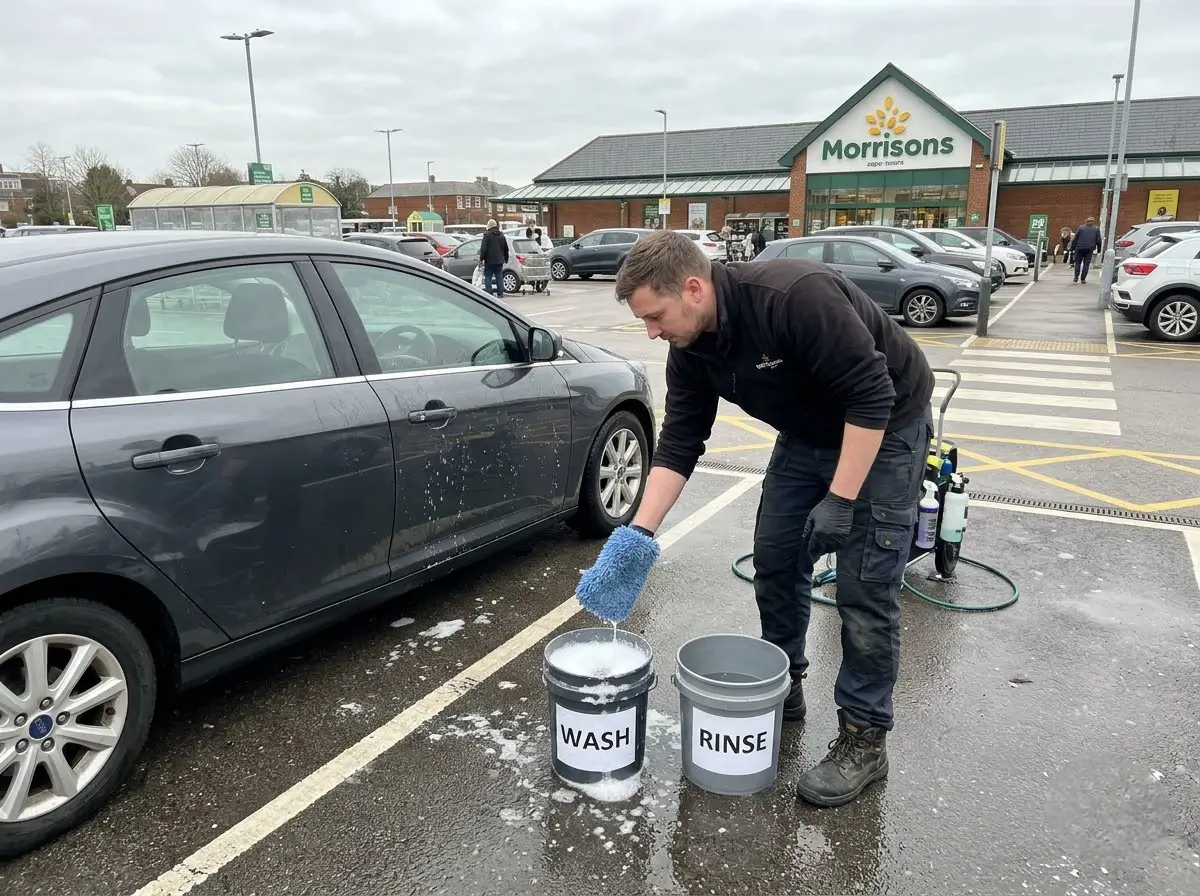
What happens in our bay, step by step
Our process follows the same order every time. Consistency is half the job.
- Check the car over. We look for heavy mud, bird droppings and anything that needs care before a mitt goes near it.
- Rinse the loose dirt off. The worst of the grime comes off before anyone touches the paint.
- Wash top to bottom with pH-balanced shampoo. Roof first, lower panels last, because the bottom of the car is always the dirtiest.
- Rinse the mitt in the clean bucket after each panel. This is the step one-bucket washes skip.
- Wheels and tyres get their own kit. Brake dust and road grime never share a mitt with your paint.
- Final rinse and microfibre dry. Soft microfibre towels lift water without dragging, which keeps the finish streak-free.
None of this uses brushes or automated rollers. Hand washing means nothing harsh touches the car, which helps protect the paint and, over time, the resale value.
Hand wash vs automatic: where the risk sits
| Factor | Two-bucket hand wash (our method) | Automatic brush wash | One-bucket hand wash |
|---|---|---|---|
| What touches the paint | Soft microfibre mitt | Rotating brushes or rollers | Mitt, often with grit in the water |
| Grit control | Rinse bucket traps it | Depends on brush cleaning | Grit goes back into wash water |
| Wheels | Separate kit | Same pass | Often same mitt |
| Attention to detail | Every panel checked by hand | Machine can miss shapes | Varies |
| Swirl mark risk | Lowest | Higher | Higher |
We’ve written more on the price side of this in automatic vs hand wash pricing. This post is about what happens to the paint.
Why the shampoo matters too
Washing-up liquid and household cleaners can strip the protective layers on your paint. We use pH-balanced car shampoo instead. It lifts dirt without attacking wax or coatings, so the car stays protected between visits.
If you wash at home in between, the same rule applies: car shampoo, clean water, microfibre mitts. Not the bottle from under the kitchen sink.
Who this matters for most
Honestly, everyone benefits. But a few owners notice the difference straight away:
- Dark cars. Black, navy and dark grey show every swirl.
- Newer and executive cars. If you’ve paid for good paint, you want it to stay that way.
- Leased cars. Swirls and scratches can become a conversation at hand-back.
- Light commercial vehicles. Big flat panels show wash marks badly, and your van is your business card.
We wash private cars, family cars, executive cars and light commercial vehicles with the same method. No shortcuts for smaller jobs.
When is the best time to come in?
If you’re washing at home, early morning or late afternoon is best, out of strong sun, so the water and shampoo don’t dry on the paint and leave spots. In our bay, our team works fast enough panel by panel that this is handled for you.
For how often: for most cars, every two weeks keeps dirt and road grime from settling into the paint. More often if you drive muddy lanes or through bad weather.
Frequently asked questions
What is the best hand car wash method?
The two-bucket method with pH-balanced shampoo and microfibre mitts. One bucket holds the wash solution, the other holds clean water for rinsing the mitt, so grit doesn’t go back onto the paint.
Is a hand car wash better than an automatic one?
For paint care, yes. Hand washing means no brushes or rollers touch your car, and the valeter can see and clean every panel properly.
Do you wash vans as well as cars?
Yes. We wash private cars, family and executive cars, and light commercial vehicles using the same method.
How often should I get a hand car wash?
Every two weeks suits most cars. If you’re often on muddy roads or out in harsh weather, more often helps.
Where are you based?
Braintree Rd, Witham CM8 2BY, in the Morrisons car park.
Book the best hand car wash in Witham
The best hand car wash isn’t about fancy names on a price board. It’s about two buckets, the right shampoo, soft microfibre and a team that does every panel the same way. That’s what we do at Bright Valeting Group, every day, in the Morrisons car park on Braintree Road.
Pull in while you shop, or call us on 07878 930 437 or 07361 902578. You can also WhatsApp us or see our hand car wash service for more. Want to see results first? Have a look at our gallery.
Visit Us Today →