

Best Hand Car Wash: What Actually Happens to Your Car, Step by Step
Search "best hand car wash" and most results tell you it's the best option without explaining why. That's not particularly convincing if you've never had one done and can't picture the difference between it and the £6 tunnel wash at the petrol station. So here's the actual process, the two-bucket method behind it, and why it protects your paintwork in a way a rotating brush simply can't.
Why "Hand Wash" Doesn't Just Mean "By Hand"
Technically, dragging a sponge over your car in the driveway counts as a hand wash. What separates a genuinely good one is the method behind it, specifically how dirt gets removed from the wash mitt between panels. Get this wrong and a hand wash can actually cause more swirl marks than a decent automated system. Get it right, and you avoid the problem automated washes are known for entirely.
The Two-Bucket Method, Explained
This is the technical core of a proper hand wash, and it's simpler than it sounds. One bucket holds clean, soapy water. The other holds plain water only, used purely for rinsing grit and dirt off the wash mitt before it goes back into the soap bucket. Without that second bucket, every pass across the car drags the grit picked up from the last panel straight back onto the paintwork, which is exactly how fine scratches, known as swirl marks, build up over time. A team using the two-bucket method consistently is doing the one thing that actually prevents this.
Step by Step: What a Proper Hand Wash Looks Like
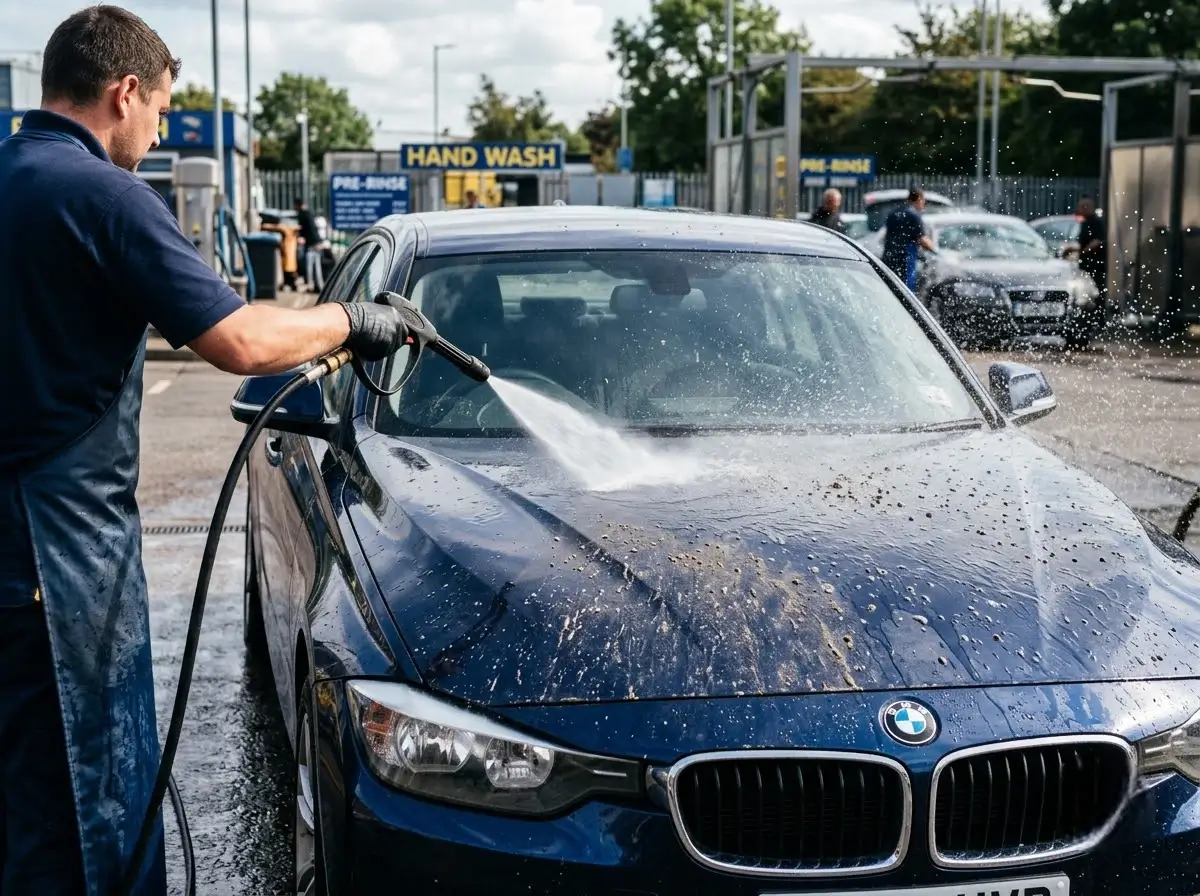
- Pre-rinse. Loose dirt and grit get rinsed off first, before any contact with a mitt or sponge, to reduce what's being dragged across the paint during the wash itself.
- Wash, using the two-bucket method. Soft microfibre wash mitts and a pH-balanced car shampoo are used panel by panel, with the mitt rinsed in the second bucket between each section.
- Wheels and lower panels last. These carry the most brake dust and road grime, so they're cleaned separately to avoid contaminating the mitt used on the paintwork.
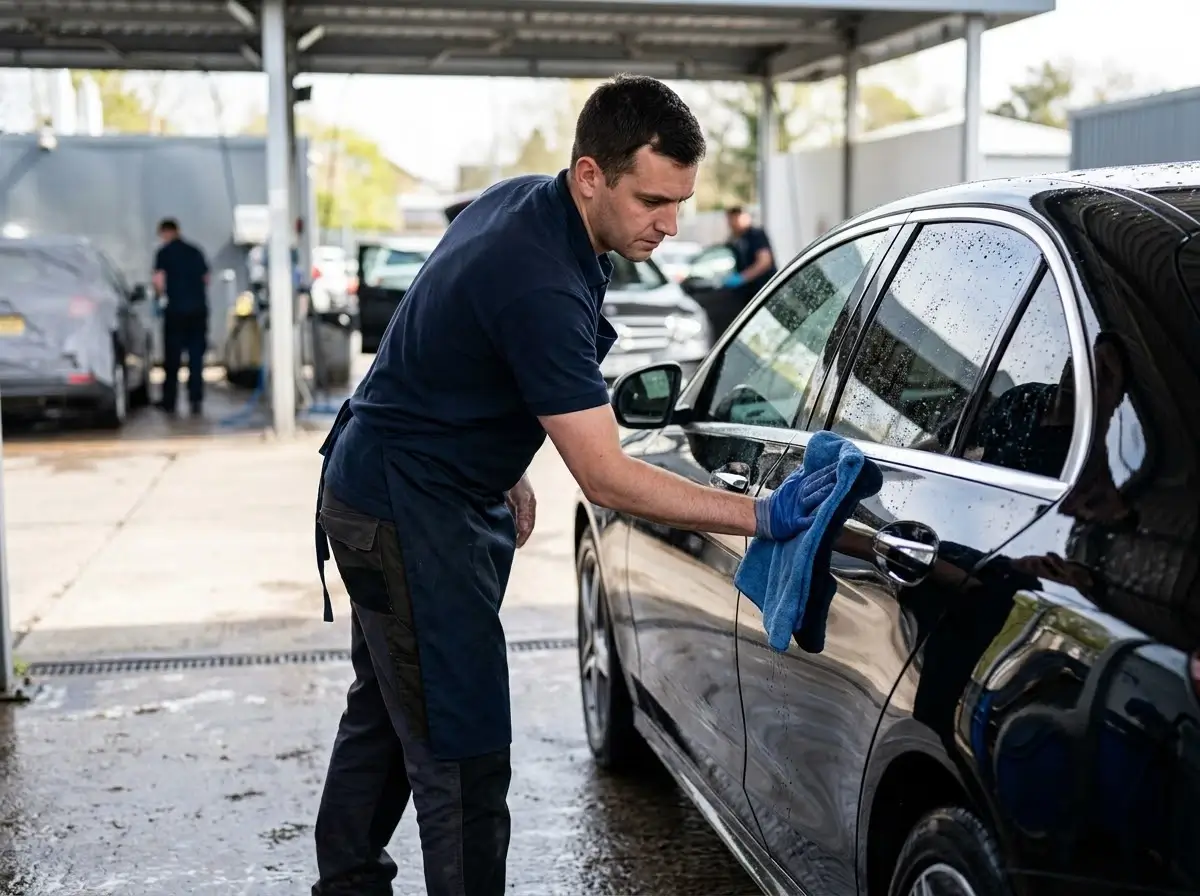
- Rinse and dry. A final rinse removes any remaining suds, followed by drying with clean microfibre towels rather than letting the vehicle air-dry, which is what causes water spots.
Why This Beats an Automated Wash
| Factor | Automated Tunnel Wash | Best Hand Car Wash (Two-Bucket Method) |
|---|---|---|
| Risk of swirl marks | Higher, shared brushes touch every car | Lower, no brushes, mitt rinsed between panels |
| Attention to trim and edges | Limited, fixed brush pattern | Full coverage by hand |
| Suitable for newer or higher-value cars | Higher risk of visible marks over time | Lower risk, gentler technique |
| Speed | Faster | Takes longer, more thorough |
| Consistency | Depends on machine maintenance | Depends on trained technique, but repeatable |
Timing Matters Too
Even a perfect wash technique can be undone by bad timing. Washing in direct, strong sunlight causes water and shampoo to dry too fast, which is what leaves streaks and water spots behind. Early morning or late afternoon, when the car isn't sitting in full sun, gives a cleaner, streak-free finish regardless of how good the technique is.
Bright Valeting's Approach
At Bright Valeting Group, hand washing is done specifically to avoid the swirl-mark and scratch risk that comes with automated rollers, using the two-bucket method as standard rather than as an upsell. We work on private cars, family vehicles, executive cars and light commercial vehicles, and the same careful technique is used across MOT valeting and body shop preparation, not just the standard wash. Pricing is stated upfront, with no hidden costs once you arrive.
FAQ: Best Hand Car Wash
What is the two-bucket method and why does it matter?
It's a technique using one bucket of soapy water and a separate bucket of clean rinse water, so grit is washed off the mitt before it goes back into the soap. Without it, dirt gets dragged across the paint on every pass, which is a common cause of swirl marks.
Is a hand car wash actually better than an automated one?
For paintwork protection, yes. Automated systems use rotating brushes shared across every vehicle that goes through, which increases the risk of fine scratches building up over repeated washes. Hand washing avoids brushes entirely.
How often should I book a hand car wash?
Every two weeks is a reasonable baseline for most vehicles. If you're driving on muddy or gritty roads regularly, more frequent washing helps prevent buildup.
What's the best time of day for a hand car wash?
Early morning or late afternoon, when the sun isn't at full strength. Washing in direct sunlight causes water and shampoo to dry too quickly, leading to streaks and water spots.
Can I request the two-bucket method specifically when booking?
You can, and it's a reasonable question to ask any car wash. At Bright Valeting it's standard practice rather than an optional extra.
Book a Wash That Actually Protects Your Car
Now that you know what should be happening during a genuinely good hand wash, it's worth asking any provider whether they're doing it. Our hand car wash service uses the two-bucket method as standard, and if your vehicle needs more than a wash, our MOT valeting and body shop prep run on the same careful process. Get in touch to book, or read more about who we are first.
Book the best hand car wash in Witham today.
Visit Us Today →